
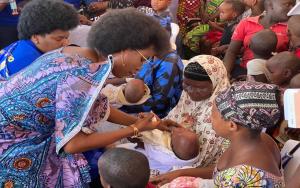
Despite advancements, approximately 4.9 million children worldwide died before reaching their fifth birthday, equivalent to one death every six seconds.
According to the latest estimates from the United Nations Inter-agency Group for Child Mortality Estimation (UN IGME), the number of children succumbing before age five has reached a historical low, dropping to 4.9 million in 2022.
UNICEF Executive Director Catherine Russell emphasized the human stories behind these figures, highlighting the efforts of midwives, skilled health personnel, and community health workers in ensuring safe deliveries, vaccinations, and support for families.
The report indicates a global decrease in under-5 mortality by 51% since 2000, with several low- and lower-middle-income countries making significant progress, such as Cambodia, Malawi, Mongolia, and Rwanda, which reduced under-5 mortality by over 75%.
However, despite this progress, there remains a considerable challenge in ending preventable child and youth deaths. In addition to the 4.9 million under-5 deaths, another 2.1 million children and youth aged 5-24 lost their lives prematurely, with most deaths concentrated in sub-Saharan Africa and Southern Asia.
These losses primarily stem from preventable or treatable causes such as preterm birth, birth complications, pneumonia, diarrhea, and malaria. Better access to quality primary healthcare, including vaccinations, skilled birth attendance, breastfeeding support, and treatment of childhood illnesses, could have saved many lives.
WHO Director-General Dr. Tedros Adhanom Ghebreyesus stressed the importance of equitable access to quality healthcare, regardless of where a child is born, advocating for investment in education, jobs, and decent working conditions for health workers.
Community health workers play a crucial role in delivering life-saving interventions and should be integrated into primary healthcare systems, adequately compensated, trained, and equipped.
The report underscores the potential of community-based interventions in reducing child mortality in high-risk countries, emphasizing the need for integrated management of childhood illnesses.
Dr. Juan Pablo Uribe, Global Director for Health, Nutrition, and Population at the World Bank, urged accelerated progress through increased investments, collaboration, and focus to honor the global commitment to end preventable child deaths.
Despite progress, substantial threats and inequities persist, including increasing inequality, economic instability, conflicts, climate change, and the fallout of COVID-19, which could reverse gains and lead to continued loss of children's lives.
Addressing these challenges requires efforts to reduce inequities and improve access to high-quality healthcare, particularly around childbirth.
Improved data and statistical systems are essential to better track and monitor child survival and health, especially in regions with high mortality burdens like sub-Saharan Africa and Southern Asia.
According to the latest estimates from the United Nations Inter-agency Group for Child Mortality Estimation (UN IGME), the number of children succumbing before age five has reached a historical low, dropping to 4.9 million in 2022.
UNICEF Executive Director Catherine Russell emphasized the human stories behind these figures, highlighting the efforts of midwives, skilled health personnel, and community health workers in ensuring safe deliveries, vaccinations, and support for families.
The report indicates a global decrease in under-5 mortality by 51% since 2000, with several low- and lower-middle-income countries making significant progress, such as Cambodia, Malawi, Mongolia, and Rwanda, which reduced under-5 mortality by over 75%.
However, despite this progress, there remains a considerable challenge in ending preventable child and youth deaths. In addition to the 4.9 million under-5 deaths, another 2.1 million children and youth aged 5-24 lost their lives prematurely, with most deaths concentrated in sub-Saharan Africa and Southern Asia.
These losses primarily stem from preventable or treatable causes such as preterm birth, birth complications, pneumonia, diarrhea, and malaria. Better access to quality primary healthcare, including vaccinations, skilled birth attendance, breastfeeding support, and treatment of childhood illnesses, could have saved many lives.
WHO Director-General Dr. Tedros Adhanom Ghebreyesus stressed the importance of equitable access to quality healthcare, regardless of where a child is born, advocating for investment in education, jobs, and decent working conditions for health workers.
Community health workers play a crucial role in delivering life-saving interventions and should be integrated into primary healthcare systems, adequately compensated, trained, and equipped.
The report underscores the potential of community-based interventions in reducing child mortality in high-risk countries, emphasizing the need for integrated management of childhood illnesses.
Dr. Juan Pablo Uribe, Global Director for Health, Nutrition, and Population at the World Bank, urged accelerated progress through increased investments, collaboration, and focus to honor the global commitment to end preventable child deaths.
Despite progress, substantial threats and inequities persist, including increasing inequality, economic instability, conflicts, climate change, and the fallout of COVID-19, which could reverse gains and lead to continued loss of children's lives.
Addressing these challenges requires efforts to reduce inequities and improve access to high-quality healthcare, particularly around childbirth.
Improved data and statistical systems are essential to better track and monitor child survival and health, especially in regions with high mortality burdens like sub-Saharan Africa and Southern Asia.
About this article
From the Medical Directory library. For advice about your own health, speak to your healthcare professional.
JOIN THE CONVERSATION



No comments yet. Add a thoughtful question or comment about this article.