
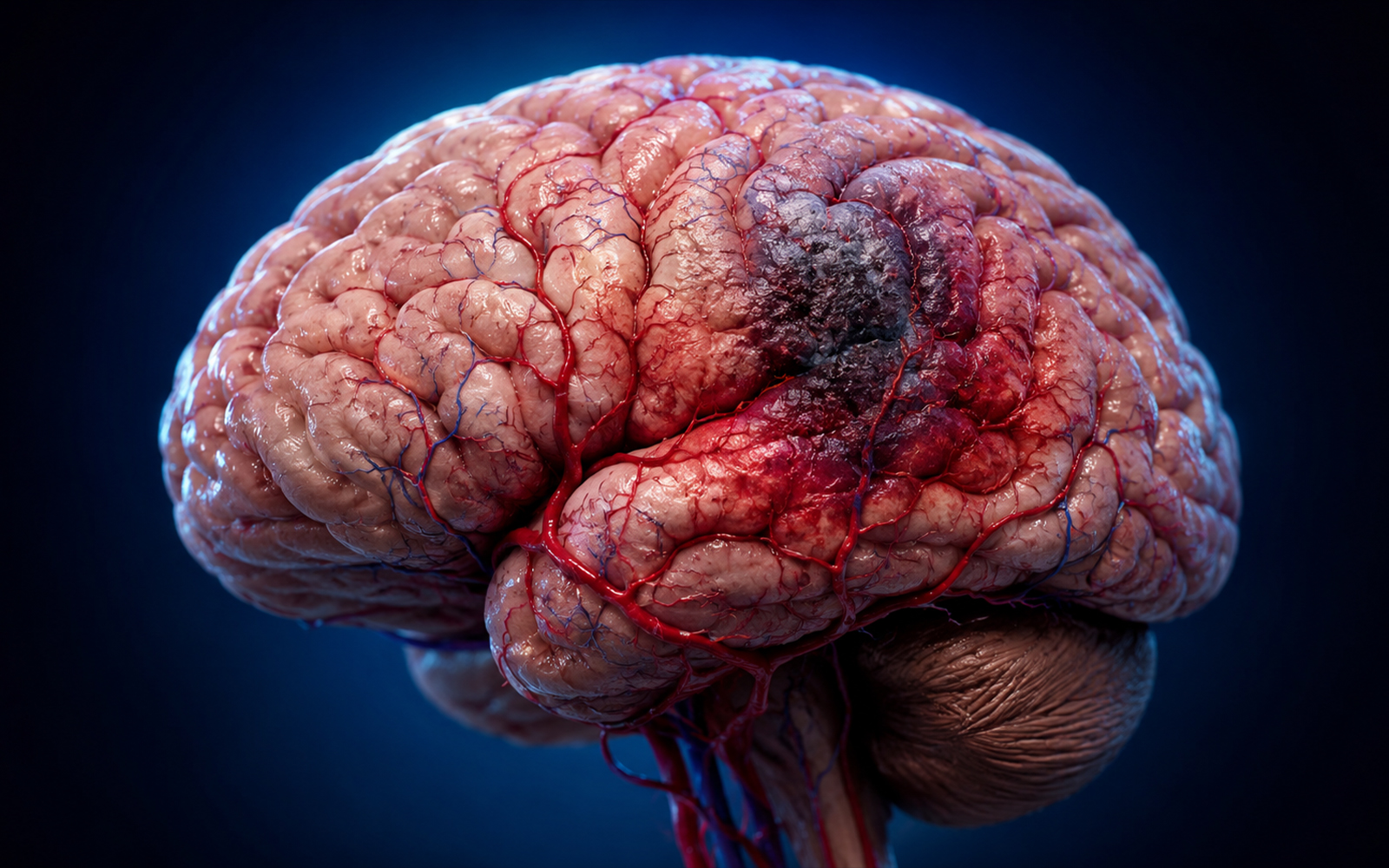
New neuroscience research is helping explain why some stroke survivors develop pain that spreads beyond the side of the body originally affected by the brain injury. Researchers studying post-stroke pain found that a one-sided brain injury can trigger an increase in lysophosphatidic acid, or LPA, a lipid-signalling molecule linked to nerve pain and inflammation. This appears to activate microglia, the brain's immune cells, and may then allow inflammatory signals to spread through the corpus callosum, the nerve-fibre bridge connecting the brain's two hemispheres. As the process continues, another inflammatory molecule, PGE2, rises and may contribute to "mirror-image" pain, where discomfort spreads to the opposite side of the body. The discovery matters because post-stroke pain is often difficult to treat, especially when it becomes widespread, persistent and poorly explained by visible injury alone. Although still at the research stage, the findings suggest that targeting lipid-driven inflammation after stroke could one day help doctors prevent or reduce chronic pain complications, giving stroke rehabilitation a new biological pathway to explore.
From the Medical Directory library. For advice about your own health, speak to your healthcare professional.
JOIN THE CONVERSATION



No comments yet. Add a thoughtful question or comment about this article.