
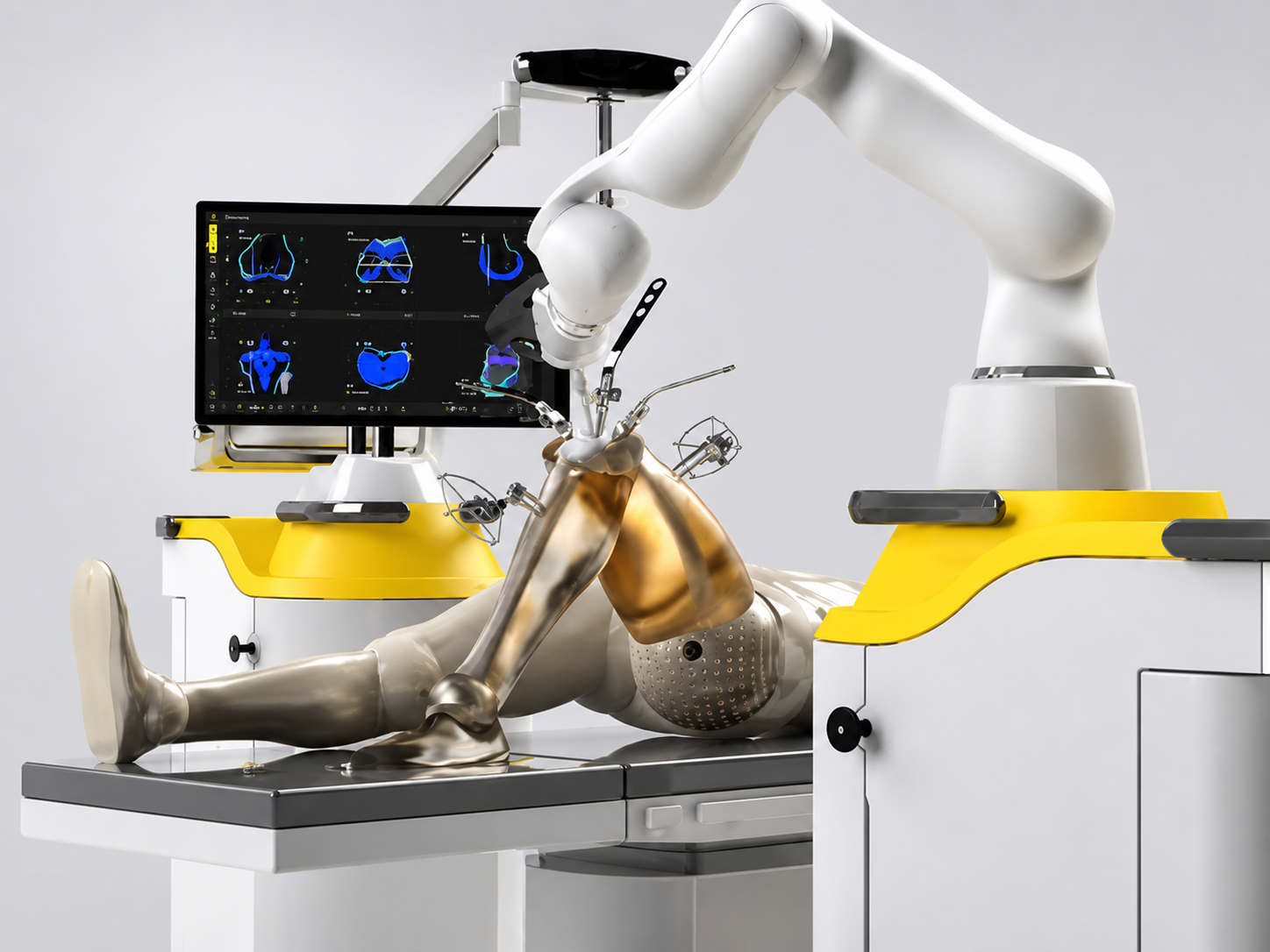
A major UK clinical trial is challenging the assumption that greater surgical precision automatically means better recovery for patients undergoing total knee replacement, after researchers found that robot-assisted surgery produced no meaningful improvement in pain, mobility or overall recovery at one year compared with conventional surgery. The RACER-Knee trial, published in The Lancet, involved 339 patients treated across 10 hospitals by 33 surgeons and compared standard total knee replacement with procedures assisted by the widely used Mako robotic-arm system. Although the robotic system allowed surgeons to position implants and make bone cuts with greater precision, patients in both groups reported similar results on the Forgotten Joint Score, a measure of how naturally the artificial knee feels during everyday life, while walking ability, pain levels and the likelihood of needing further surgery were also broadly comparable. The findings are particularly important because robotic systems are becoming increasingly common in orthopaedic theatres around the world and are often promoted as a way to personalise surgery according to an individual patient’s anatomy. In this trial, however, robotic procedures took an average of 10.5 minutes longer and cost roughly £950 more per operation, and researchers concluded that the system tested was not cost-effective during the first year under current UK healthcare thresholds. Importantly, robot-assisted surgery was not associated with an increased rate of serious adverse events, suggesting that it was as safe as conventional knee replacement, and researchers are continuing to follow participants for up to 10 years to determine whether improved implant positioning eventually leads to fewer revision operations or longer-lasting replacements. The study does not suggest that surgical robotics has no future in orthopaedics; instead, it provides a reminder that sophisticated technology must ultimately prove its value through outcomes that matter to patients. As hospitals invest heavily in robotic platforms, the RACER-Knee findings strengthen the case for judging new surgical technology not only by how accurately a machine can position an implant, but by whether that additional precision translates into less pain, better movement, fewer complications and longer-lasting benefits for the person receiving the new knee.
From the Medical Directory library. For advice about your own health, speak to your healthcare professional.
Original source ↗JOIN THE CONVERSATION


No comments yet. Add a thoughtful question or comment about this article.